By Aderonke Ojediran
In a city regarded as Nigeria’s commercial and political nerve centre and one of Africa’s fastest-growing megacities, increasing presence of refuse heaps on road medians, drainage channels, under bridges and on highways presents a troubling contradiction.
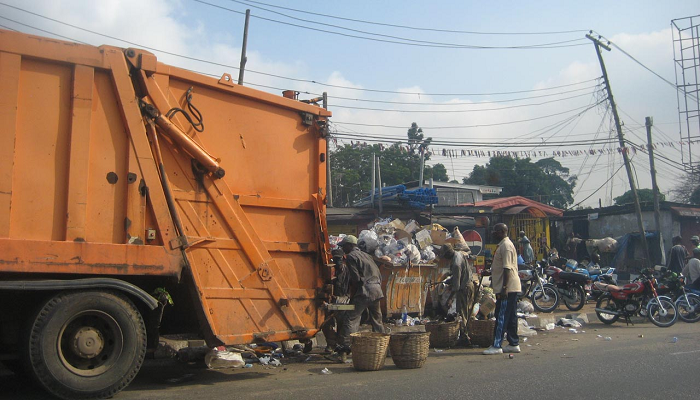
From Oshodi, Ikotun to Ijegun, Surulere and Lagos Island, indiscriminate waste disposal has become a huge challenge, raising concerns among residents, environmental experts and government officials about the future of Lagos State with regard to cleanliness.
In spite of the return of monthly environmental sanitation to the state in April, bags of refuse still litter streets and markets of Lagos.
The situation has become more worrisome and embarrassing as refuse is now routinely dumped on road dividers meant for beautification and landscaping.
In some communities, drainage channels designed to facilitate free flow of stormwater have become repositories for plastic waste, food remnants and household refuse.
While the state government continues to invest heavily in waste management infrastructure and environmental sustainability programmes, many observers believe that the battle against poor sanitation cannot be won without a deliberate change of Lagos residents’ attitudes.
Analysts are also convinced that more commitment from waste collectors and other stakeholders is needed.
Environmental experts have always warned that improper waste disposal contributes significantly to flooding, environmental pollution and public health risks, especially during the rainy season.
Lagoa State Gov. Babajide Sanwo-Olu last week expressed concern at the situation, urging residents to take ownership of their surroundings and desist from indiscriminate waste disposal.
Through his social media platforms, the governor stressed that environmental cleanliness remained a collective responsibility, and called on the residents to support government efforts at maintaining a cleaner and healthier Lagos.
His message resonated with many residents who acknowledge that while government agencies have a role to play, individual behaviour remains a major factor in the state’s waste management.
The Managing Director of the Lagos Waste Management Authority (LAWMA), Dr Muyiwa Gbadegesin, has repeatedly emphasised that waste management is a shared responsibility.
According to him, sustainable environmental sanitation can only be achieved when residents embrace proper waste disposal practices and patronise approved operators.
Over the years, LAWMA has expanded waste collection services, strengthened recycling initiatives, introduced waste sorting campaigns and intensified enforcement against environmental offenders.
In spite of these efforts, indiscriminate refuse dumping remains widespread in many areas of Lagos State.
A visit by NAN to some parts of the state revealed that heaps of refuse characterised the road medians and setbacks, some of which appeared to have been deposited overnight.
Residents and business owners on these corridors say the problem is often caused by individuals who dispose of waste under the cover of darkness.
Mr Akeem Lawal, who operates a shop on the Oshodi-Apapa Expressway, said communities must become more vigilant.
“Many of the people dumping refuse on road dividers do so at night.
“Residents and shop owners living around these areas know what happens and should work together to identify offenders and report them to the appropriate authorities,” he said.
Mrs Chidinma Okafor, a resident of Abule-Egba, believes community participation is critical to addressing the problem.
“We cannot continue blaming government for everything.
“Some residents dump refuse indiscriminately and then complain about dirty surroundings.
“Communities should organise themselves to discourage such behaviour and report offenders whenever they are caught,” she said.
For Mr Tunde Balogun, a trader at Ikotun, enforcement is an important component of the solution.
“The state government must continue to enforce environmental laws.
“When people see that there are consequences for violating sanitation laws, they become more careful.
“Residents need to understand that public spaces are not refuse dumping grounds,” he said.
Similarly, Mrs Yetunde Adebayo, a resident of Surulere, called on people living or doing business on major roads to take greater responsibility for protecting their environments.
“If refuse is constantly being dumped on a road divider in a particular area, those who live and work there should not ignore it.
“They can monitor the area, alert authorities and help to prevent offenders from turning public spaces into dumpsites,” she said.
Environmentalists argue that such community-based vigilance can significantly reduce indiscriminate waste disposal if properly coordinated with government agencies.
They say that neighbourhood associations, market groups and community development associations have an important role to play in promoting environmental sanitation.
However, many residents insist that compliance must be supported by efficient and regular refuse collection services.
They argue that prompt evacuation of waste is necessary to sustain public confidence in the waste management system.
Mr Ibrahim Bello, a resident of Ikorodu, believes that consistency in refuse collection will encourage greater compliance among households.
“When waste is collected regularly, people are more likely to dispose of it properly.
“The state government and waste operators should continue improving collection schedules to complement residents’ efforts,” he argues.
Mrs Funmilayo Odeyemi, a food vendor at Ijegun, shared similar sentiments.
“Many residents are willing to cooperate but there should be regular evacuation of refuse and continuous public enlightenment so that people know the consequences of indiscriminate refuse dumping.”
Analysts say Lagos generates about 3,000 tonnes of waste daily and the volume is expected to increase as the state’s population continues to grow.
According to them, this reality makes responsible waste disposal very important.
They urge that government investment in waste management must be matched with responsible citizenship if Lagos is to become a clean, more resilient and environmentally-sustainable megacity.
For many stakeholders, the solution lies in a combination of stricter enforcement, continuous public education, prompt refuse collection and active community participation.
They insist that while government agencies such as LAWMA can provide the necessary infrastructure and services, residents ultimately determine the success or failure of environmental sanitation efforts through their daily actions.
As Lagos continues to pursue ambitious urban development goals, many believe that cleanliness of the city should be a government obligation and s a civic duty that must be discharged with a high level of commitment. (NANFeature)