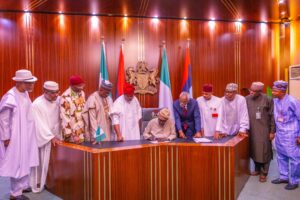
Tinubu emphasised that the amendments were designed to address procedural gaps, strengthen institutional processes, and provide greater clarity for election administrators, political parties, candidates, and voters.
By Deborah Hassan
365Daily – President Bola Ahmed Tinubu on Wednesday signed the Electoral Act, 2026 into law, declaring that the reforms are aimed at strengthening Nigeria’s electoral processes and deepening public confidence in elections.
The signing, which took place at the State House, came less than 24 hours after the National Assembly passed the final versions of the bill through third reading, paving the way for its immediate transmission to the President by the Clerk of the National Assembly.
In a statement released by his media aide, Bayo Onanuga, on X, President Tinubu said periodic review of electoral laws after every election cycle was a defining feature of serious democracies, stressing that Nigeria’s legal framework must evolve with experience.
“After every election cycle, we owe Nigerians an honest look at what worked and what must work better. That is how serious democracies behave, and our laws must grow with experience,” he said.
Announcing his assent, Tinubu emphasised that the amendments were designed to address procedural gaps, strengthen institutional processes, and provide greater clarity for election administrators, political parties, candidates, and voters.
“These amendments are not about politics. They are about process. They are about closing gaps, strengthening procedures, and providing greater clarity to those who conduct and participate in our elections,” the President stated.
He said the reforms were critical to building trust in the electoral system, from voting to the collation and declaration of results.
“When citizens walk into a polling unit, they must do so with confidence. When results are declared, they must be trusted. That confidence is built deliberately, and not by chance,” he added.
President Tinubu also commended the National Assembly for what he described as its cooperation and sense of national responsibility in concluding the legislative process within record time.
“I sincerely thank the National Assembly for its cooperation and sense of national responsibility in bringing this process to a successful conclusion. Our responsibility remains to keep improving the system so that the people’s will is expressed clearly, peacefully, and credibly,” he said.
He reaffirmed his administration’s commitment to continuous electoral reforms, noting that efforts to strengthen Nigeria’s democracy would remain a priority.
“The work of strengthening our democracy continues, and we shall not relent,” the President said.
The amended Electoral Act is expected to address key procedural and operational shortcomings observed during recent election cycles, with the aim of enhancing transparency, efficiency, and credibility in future elections.