Dedicated AI units would help bridge the knowledge gap between technology-ready personnel and workers who require additional support to adapt to the changing workplace
By Moses Okorie
The Chairman of the Board of Trustees of the Association of Nigeria Public Administrators (ANPA), Professor Kamal Bello, has urged the Federal Government to establish dedicated Artificial Intelligence (AI) desks in ministries, departments and agencies to facilitate technology adoption and enhance public service delivery.
Bello made the recommendation on Thursday in Abuja while speaking at the 6th International Annual Conference of ANPA, which examined the theme, “Artificial Intelligence, Digital Governance, and the Future of Public Administration in Nigeria.”
He said the proposed AI desks would serve as support centres within government institutions, helping civil servants understand and apply emerging technologies to their administrative responsibilities.
Bello, who is also Dean of the Faculty of Social Sciences at the National Open University of Nigeria (NOUN), said the adoption of AI across the public service should be implemented in phases rather than imposed as an immediate requirement on all workers.
He explained that many civil servants had spent between 15 and 20 years working within conventional administrative systems, making it necessary to provide structured training and technical assistance to ease their transition to digital operations.
According to him, dedicated AI units would help bridge the knowledge gap between technology-ready personnel and workers who require additional support to adapt to the changing workplace.
He stressed, however, that successful integration of AI would depend on the availability of reliable infrastructure, identifying unstable electricity, poor internet connectivity and expensive data services as major barriers to digital transformation in Nigeria.
The ANPA chairman called on the government to improve these essential services, noting that public institutions could not maximise the benefits of artificial intelligence without an enabling technological environment.
Bello also expressed confidence that AI would not completely displace human workers, insisting that people would continue to play significant roles despite advances in automation and robotics.
Speaking on the association’s development, he said ANPA had recorded significant growth in its six years of existence, with membership exceeding 500 across Nigeria’s geopolitical zones.
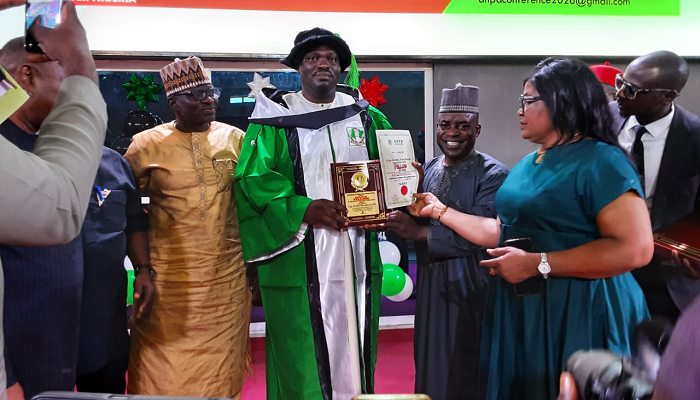
He added that the association had maintained a tradition of annual academic journal publications and organised conferences in different locations to promote professional development and research in public administration.
He disclosed that the association held its previous conference in Uyo, Akwa Ibom State, while Lead City University, Ibadan, Oyo State, was expected to host the next edition.
The keynote speaker, Engineer Michael Oluwagbemi, immediate past Chief Executive of the Presidential Initiative on Compressed Natural Gas (CNG), also raised concerns about the limited application of AI by government officials.
He questioned how public institutions could deliver quality services efficiently in the present technological era without taking advantage of artificial intelligence.
In his lead paper, Professor Oyadiran Philip Adeyinka, a specialist in Human Resource Management and Policy Analysis, expressed hope that the conference would produce practical recommendations to guide the government’s development agenda.
He described AI and digital governance as part of a continuous process of change driven by creativity, innovation and technological advancement.
The conference also featured an awards presentation to recognise Nigerians who had distinguished themselves in various fields of endeavour.