You’ve warned me not to allow the rigour of the campaign to distract me from governance, I hear you. I am in full agreement with your decision. Nigeria needs more attention now
By Emeka Alex Duru
Every election is unique in its circumstances and defining characteristics. The contestants may differ, and their agendas may vary, but certain fundamental principles remain constant. Elections are expected to inspire hope, raise expectations and offer citizens the assurance that the mistakes of the past will be corrected. They represent opportunities for a fresh beginning and a better future.
This explains why election periods are often characterised by heightened political activities, public debates and promises from candidates seeking election or re-election. Incumbents seek to convince voters that they deserve another term, while challengers present themselves as credible alternatives. They outline their plans, explain what they intend to do differently and seek the mandate of the electorate.
For presidential candidates, the responsibility is even greater. They must market not only themselves but also their political parties and their vision for the country. As the faces of their parties, they carry the burden of convincing millions of citizens that they possess the competence, character and capacity to lead the nation.
Being a presidential candidate, therefore, is no ordinary undertaking. The presidency is an office of enormous responsibility, demanding serious-minded individuals who understand the weight of the mandate they seek. As Gerald R. Ford, the 38th President of the United States, famously observed, the presidency is not a prize to be won but a duty to be performed. Similarly, American essayist John Dickerson has described the presidency as one of the hardest jobs in the world, requiring the occupant to help mend the national fabric whenever it begins to unravel.
These are important lessons for those aspiring to lead Nigeria in 2027. The presidency is too demanding to be treated as a mere political prize. Yet, judging by President Bola Tinubu’s recent declaration to members of his party’s Presidential Campaign Council, one may reasonably question whether he fully appreciates the demands of the office he seeks to retain.
Tinubu reportedly told members of the All Progressives Congress (APC) Presidential Campaign Council not to expect him to accompany them on every campaign outing ahead of the 2027 general election. His explanation was that he needed to concentrate on governance, particularly the country’s economic challenges.
Instead, he urged the campaign team to take the party’s message to Nigerians across the states and local government areas while he remained focused on the business of government.
“You’ve warned me not to allow the rigour of the campaign to distract me from governance, I hear you. I am in full agreement with your decision. Nigeria needs more attention now,” the President reportedly said.
With due respect, Mr President, this is hardly a convincing argument.
Here is a President who, according to media tracking reports, has spent approximately 245 days outside Nigeria since assuming office in May 2023, yet now invokes the need to concentrate on governance as a reason for limiting his participation in campaign activities. The explanation raises more questions than it answers.
If the President can be away from the country for extended periods, why should direct engagement with Nigerians during an election campaign suddenly become an insurmountable distraction?
The argument is difficult to sustain. President Tinubu and his handlers need to appreciate that Nigeria operates a democracy, not a feudal system in which a monarch retreats into his palace and leaves courtiers to communicate his decisions to the people.
Democracy is not a shadowy exercise conducted through proxies. It requires the physical presence, participation and accountability of those seeking the people’s mandate.
Nigerians need more than the names, faces and party affiliations of presidential candidates. They deserve opportunities to engage them directly, ask difficult questions, scrutinise their policies and assess their competence, temperament and emotional intelligence. Voters must be able to determine whether candidates understand the country’s challenges and possess workable solutions to them.
Citizens also deserve to know what presidential candidates represent ideologically and the programmes they intend to implement to reposition the country. For a nation that has struggled with poor leadership and governance failures throughout much of its 66 years of independence, demanding such clarity is hardly unreasonable.
Direct engagement enables voters to make informed decisions at the ballot box. It also allows candidates to explain their records, defend their policies and clarify their commitments. President Tinubu should not seek to avoid this responsibility. The constituency of a presidential candidate extends across the entire country, not merely the confines of Aso Rock Villa.
The dangers of the President’s reported decision to rely heavily on campaign surrogates are considerable. Without hearing directly from him, Nigerians may find it difficult to hold him accountable for promises made by party officials and political allies on his behalf.
The experience of the 2023 election provides sufficient grounds for concern.
During that campaign, Tinubu outlined a range of proposals for addressing Nigeria’s problems. They included comprehensive infrastructure development, stabilisation of the naira, economic restructuring, the fight against corruption and insecurity, and fiscal and physical restructuring of the country. He also promised to tackle the country’s persistent electricity challenges, reportedly pledging to address the problem within six months of assuming office.
However, following his inauguration on May 29, 2023, his administration embarked on major policy changes, including the removal of petrol subsidy and the adoption of a new foreign exchange regime. While the government has defended these measures as necessary economic reforms, their consequences have placed considerable pressure on households and businesses.
Petrol prices have risen sharply, with a litre of Premium Motor Spirit reportedly selling for more than N1,400 in some parts of the country. The naira has also experienced substantial depreciation, contributing to the rising cost of imported goods and essential commodities.
The effects on ordinary Nigerians have been severe.
According to the 2026 Global Multidimensional Poverty Index, Nigeria recorded the world’s largest increase in the number of people living in multidimensional poverty, with an additional 17.9 million Nigerians falling into poverty between 2021 and 2024. The report, published by the United Nations Development Programme and the Oxford Poverty and Human Development Initiative, placed Nigeria ahead of Afghanistan, which recorded an increase of 5.3 million people during its latest assessment period.
The country’s security situation also remains deeply troubling. Nigeria ranked fourth globally in the 2026 Global Terrorism Index published by the Institute for Economics and Peace, with its terrorism index score rising to 7.79 points. Meanwhile, estimates place the number of internally displaced persons in the country at between 3.5 million and 3.7 million, underscoring the scale of the humanitarian crisis.
These are serious national challenges that the President and other presidential contenders must address. Nigerians deserve detailed explanations of what went wrong, what has been achieved and what concrete measures the candidates intend to adopt to improve the situation.
Such explanations cannot be adequately supplied by political intermediaries. The candidates themselves must take responsibility for communicating their policies and defending their records.
The experience of former President Muhammadu Buhari should serve as a cautionary tale. During the 2015 election campaign, the APC made numerous promises to Nigerians. However, after assuming office, Buhari reportedly distanced himself from some of those commitments, arguing that several promises had been made by the party rather than by him personally.
His administration subsequently struggled with several policy challenges throughout its eight years in office. The episode demonstrated the dangers of allowing campaign promises to become detached from the personal commitments and accountability of those elected to implement them.
Nigeria cannot afford a repetition of that experience.
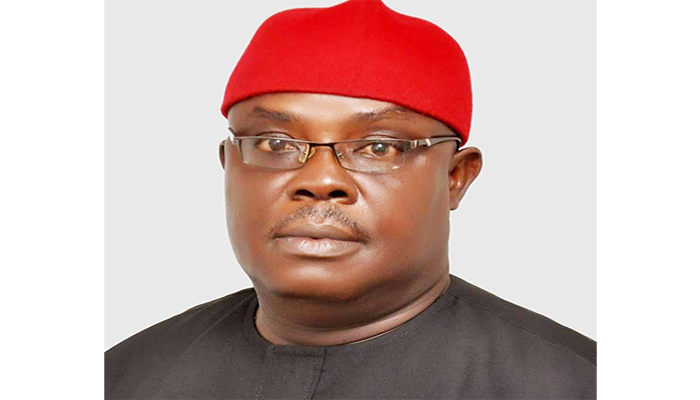
President Tinubu therefore owes Nigerians a duty to engage them directly, rather than leave the task largely to political surrogates. Peter Obi, the presidential candidate of the Nigeria Democratic Congress (NDC), captured this concern when he argued that surrogates could speak for the President but could not answer for his failures.
They could repeat his promises, he maintained, but could not make those promises a reality or assume responsibility for the consequences of his decisions.
The point is difficult to dispute. Accountability cannot be delegated. A President cannot outsource the defence of his record to party leaders, political allies and praise singers while millions of citizens grapple with the consequences of government policies.
President Tinubu needs to hear directly from Nigerians. He needs to know how they feel about the state of the economy, the cost of living, insecurity, electricity supply, unemployment and other pressing national concerns. More importantly, he should be prepared to listen to whether Nigerians believe their lives have improved or deteriorated since he assumed office.
This is the essence of democratic engagement: not merely speaking to the people, but listening to them, answering their questions and accepting responsibility for the choices made in their name.
Abraham Lincoln, the 16th President of the United States, famously defined democracy as government of the people, by the people and for the people. The principle remains relevant to Nigeria’s democratic experience. Leadership must be rooted in the people, and those seeking to retain power must be prepared to account for their stewardship.
Mr President, Nigerians need to hear directly from you. They need to understand your vision for a second term, the lessons you have learnt from your first tenure and the specific steps you intend to take to address the country’s mounting challenges. They deserve to know why they should renew your mandate and what would be different if they did.
The choice is yours: make yourself available to the electorate, defend your record and explain your plans, or reconsider your continued participation in the race if you are unable or unwilling to undertake the demands of the campaign.
Stepping aside in the face of genuine limitations would not necessarily amount to cowardice. It could instead demonstrate an appreciation of the enormity of the responsibility involved.
As Harry S. Truman, the 33rd President of the United States, famously advised, “If you can’t stand the heat, get out of the kitchen.”
The Nigerian presidency is neither a do-or-die affair nor a retirement home. It is a demanding public trust that requires stamina, commitment, accessibility and accountability.
Above all, it requires a leader who is willing to face the people, listen to their concerns and answer for his record.
Emeka Alex Duru, PhD, is the Editor of TheNiche Online Newspapers, Lagos. (08054103327, nwaukpala@yahoo.com)