Diverting 20 per cent of the board’s revenue would significantly reduce its capacity to discharge its statutory responsibilities and sustain existing interventions in the industry
By Njoku Vincent
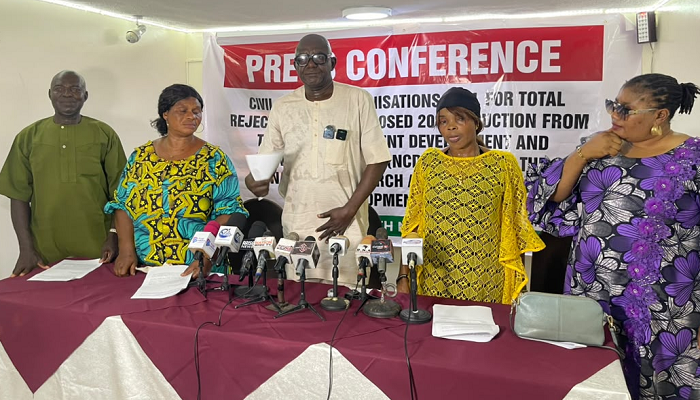
The Coalition of Civil Society Organisations in Nigeria (COCSON) has urged the National Assembly to reject a proposed 20 per cent deduction from the revenue of the Nigerian Content Development and Monitoring Board (NCDMB) to fund the proposed National Research and Innovation Development Fund.
The coalition warned that the proposal could undermine Nigeria’s local content development programme, weaken indigenous capacity and threaten efforts to promote local participation in the oil and gas industry.
COCSON spokesperson, Tabuko Kennedy, made the position known at a press conference in Abuja on Thursday, November 26, 2026, describing the proposed funding arrangement as unacceptable.
Kennedy clarified that the coalition was not opposed to establishing a national research and innovation fund but objected to the decision to finance it through deductions from the NCDMB’s revenue.
He explained that the funds accruing to the board were specifically intended to support indigenous companies, train Nigerian engineers, develop local expertise and promote value addition in the oil and gas sector.
According to him, diverting 20 per cent of the board’s revenue would significantly reduce its capacity to discharge its statutory responsibilities and sustain existing interventions in the industry.
He maintained that the funds were not surplus government revenue but contributions from companies operating in the oil and gas sector, collected specifically to advance local content development.
Kennedy argued that redirecting the resources without the consent of relevant industry stakeholders would constitute a breach of trust and defeat the purpose for which the contributions were made.
The coalition also expressed concern that approving the deduction could create a precedent for diverting resources from other specialised government intervention agencies to finance newly established institutions.
It specifically questioned whether similar deductions could eventually be extended to the Tertiary Education Trust Fund, Universal Service Provision Fund and Police Trust Fund.
Such a development, Kennedy warned, could discourage revenue-generating agencies from improving their financial performance, encourage inter-agency competition and disrupt long-term institutional planning.
COCSON further argued that the proposed deduction was inconsistent with the Nigerian Oil and Gas Industry Content Development Act, which provides the legal framework for the administration and utilisation of resources accruing to the NCDMB.
The coalition maintained that the legislation did not envisage the use of funds earmarked for local content development to finance an unrelated research and innovation institution.
Consequently, it called on the leadership of the National Assembly, relevant legislative committees and the Federal Executive Council to reject the controversial funding provision.
The group also appealed to President Bola Tinubu to withhold assent to the proposed legislation if the 20 per cent deduction remained in the bill.
Kennedy disclosed that COCSON had begun mobilising organised labour, pressure groups, religious organisations and other civil society groups to oppose the proposed funding arrangement.
He, however, reiterated that the coalition supported research, innovation and the establishment of a national research funding institution, insisting that the government should explore alternative sources of funding.
COCSON urged Nigerians and industry stakeholders to speak out against what it described as legislative overreach, warning that weakening the NCDMB’s financial capacity could reverse gains recorded in the country’s local content development efforts.
The coalition stressed that the pursuit of research and innovation should not come at the expense of existing institutions established to strengthen indigenous participation and economic development.