The immediate challenge, therefore, is to translate public admiration into sustainable political influence. Obi’s growing prominence, both at home and abroad, presents an opportunity but also imposes greater responsibilities
By Ike Abonyi
In 2023, critics dismissed Peter Obi as a politician whose influence was limited to a handful of social media enthusiasts, with some suggesting that only two or three people were posting about him on Twitter from a room. Following his impressive electoral showing, his opponents have continued to portray him as a youth-driven political phenomenon sustained largely by social media but lacking the organisational structure required for national political success.
Yet, Obi’s political influence appears to be extending beyond Nigeria’s domestic political landscape, attracting increasing international attention.
After receiving strong domestic endorsement in Kano from his running mate, Rabiu Musa Kwankwaso, who repeatedly described him as incorruptible, Obi reportedly received commendations from several American political figures in Washington, D.C., within 48 hours.
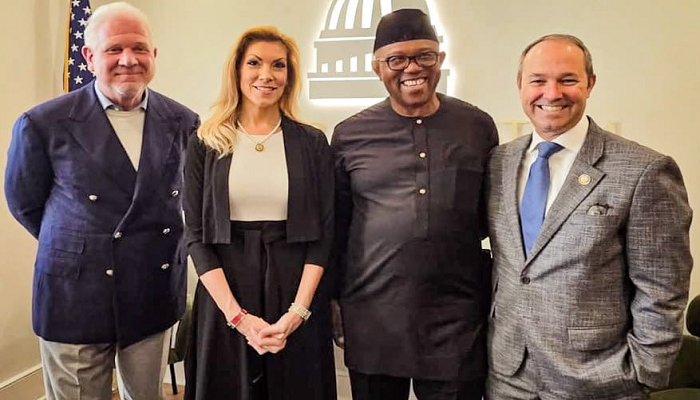
At a reception on Monday, November 16, several US political figures reportedly praised his leadership qualities and record in public service. Those mentioned included Representatives Marlin Stutzman, Todd Tiahrt and Beth Van Duyne, as well as Suzanne Bock Grisham and retired Colonel Albert V. Short.
Stutzman described Obi as a “true leader”, commending his commitment to placing public interest above personal considerations. He highlighted the former Anambra governor’s emphasis on education, healthcare, social welfare, infrastructure and prudent fiscal management.
In a separate video from the same event, Tiahrt also praised Obi’s record in education, healthcare, infrastructure, fiscal discipline and integrity.
The engagement, reportedly organised under the banner of Beyond the Border, provided another platform for international commendation of the former Anambra governor’s leadership and public service record.
The timing of the recognition is particularly noteworthy. It followed closely after Kwankwaso publicly described Obi as incorruptible, reinforcing a defining element of the political identity Obi has cultivated and the standards his supporters associate with his leadership.
Although the endorsements came from different quarters, they converge on a common argument: leadership should be measured not by the privileges acquired in office, political influence wielded or wealth accumulated, but by integrity, restraint, sacrifice and the tangible benefits delivered to the public.
Obi’s eight-year tenure as governor of Anambra State remains the strongest foundation of his leadership credentials. His administration’s emphasis on prudent resource management, investment in education and healthcare, institutional discipline and accountability continues to shape his political narrative.
To his supporters, this record represents a departure from a political culture in which public office is too often perceived as an avenue for personal enrichment rather than public service.
Consequently, Obi’s political appeal rests on more than campaign promises. It is substantially anchored on the argument that he has demonstrated, through his record in office, some of the qualities he advocates for Nigeria’s leadership.
The growing international recognition adds another dimension to his political standing. For a politician whose domestic popularity has frequently been dismissed by opponents as largely youth-driven and sustained by social media, commendations from figures outside Nigeria broaden the scope of the conversation about his political relevance.
It suggests that his leadership philosophy and record are attracting attention beyond the constituencies traditionally associated with his popularity at home.
However, international commendations should not be mistaken for electoral victories. They do not automatically translate into votes or resolve the complex challenge of building a formidable national political coalition.
Nigeria’s political landscape requires more than public admiration and favourable international assessments. It demands strong grassroots structures, strategic alliances, effective mobilisation and the ability to build bridges across the country’s regional, religious, ethnic and political divides.
Nevertheless, such recognition strengthens Obi’s supporters’ argument that his leadership credentials deserve serious national consideration.
The immediate challenge, therefore, is to translate public admiration into sustainable political influence. Obi’s growing prominence, both at home and abroad, presents an opportunity but also imposes greater responsibilities.
Popularity must be converted into effective political organisation, admiration into mobilisation, and international recognition into a broader national conversation about the kind of leadership Nigeria requires.
Ultimately, Nigeria needs more than a president who enjoys widespread popularity. It needs a leader whose character inspires confidence, whose decisions demonstrate competence and whose administration can restore public trust in governance.
The significance of the recent commendations in Washington, coming shortly after Kwankwaso’s description of Obi as incorruptible, lies in their reinforcement of a leadership narrative that his supporters believe deserves greater national attention.
Peter Obi may have emerged as a major domestic political phenomenon, but his leadership credentials are increasingly being discussed beyond Nigeria’s borders.
The critical question, however, remains whether the political goodwill surrounding him can be translated into the national consensus, institutional capacity and transformative leadership that Nigeria urgently needs.
Ike Abonyi is Editor-at-Large.